Best Mobile Proxies (2026)
4G and 5G proxies, the hardest class for a site to block because thousands of real subscribers share each carrier IP. Ranked on pool quality, carrier targeting and pricing model.
Ranked by our editorial scores - how we rate providers. Updated August 20, 2026.
Best proxy network for hard targets and enterprise scale · from $8/GB
Bright Data is the reference implementation of a commercial proxy network: biggest pool, best targeting, best unblocking tools, highest price. If a target is genuinely hard, this is what works.
- The largest and most reliable proxy pool in the industry, by a wide margin
- Targeting down to city, ZIP and ASN, with carrier selection on mobile
- Web Unlocker and Scraping Browser genuinely solve hard anti-bot problems
Best all-round proxy network for most buyers · from $2.50/GB · 14-day money-back
Decodo, formerly Smartproxy, is the default recommendation for anyone who is not an enterprise: half the price of the leaders, most of the capability, and a dashboard you can drive yourself.
- The best balance of price, pool quality and usability in the market
- Entry plans start around $11 a month, so small projects are viable
- 14-day refund policy, which is rare among proxy networks
Best enterprise proxy network with real account support · from $4.50/GB
Oxylabs matches Bright Data on the things that matter for large-scale collection and beats it on support and documentation. Small buyers will still find the minimums unfriendly.
- Closest competitor to Bright Data on pool size and success rate, with better support
- Genuine effort on ethical sourcing, including an external advisory board
- Excellent documentation, SDKs and dedicated account management
Best value residential proxies for small buyers · from $3.50/GB · 3-day money-back
IPRoyal is the small buyer's network: $7 gets you started, unused traffic never expires, and the static IP pricing undercuts almost everyone. Not the pool to bring to the hardest targets.
- Residential traffic never expires, which is uniquely buyer-friendly in this market
- Genuine entry point at $7, so tiny projects are viable
- Static ISP and datacenter IPs are among the cheapest anywhere
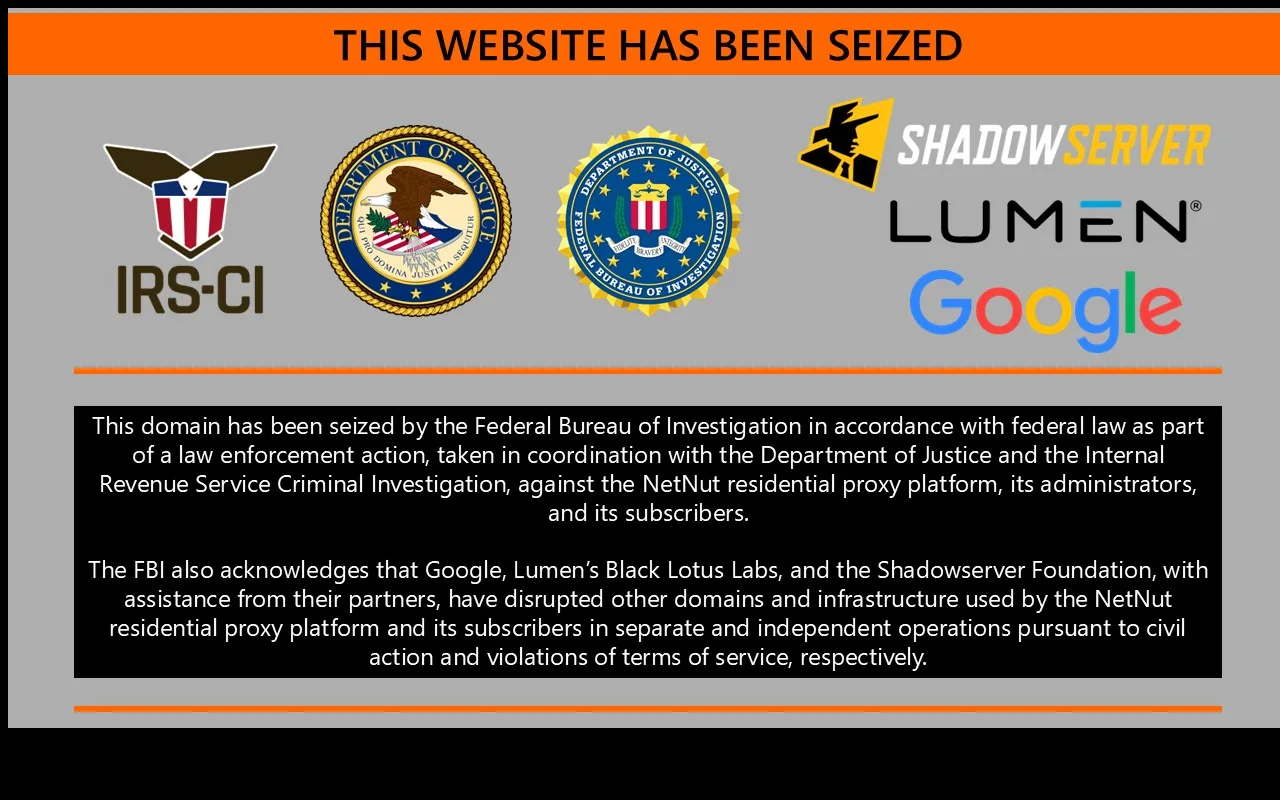
Best static residential IPs for long sessions · from $3.50/GB
NetNut's ISP peering model produces the most stable static residential addresses in this directory. If your workload needs to hold one identity for hours, this is the network.
- Direct ISP peering gives unusually stable, fast static residential IPs
- One-hop architecture avoids the latency of routing through a peer device
- Strong performance on long sticky sessions and account management workloads
Best mobile proxy pool with carrier targeting · from $4/GB
SOAX is strongest where mobile matters: a big carrier-targetable 4G and 5G pool, very long sticky sessions, and coverage in regions other networks skip.
- Very large mobile pool with carrier-level targeting, a genuine specialty
- Rotation control up to 24-hour sticky sessions, longer than most rivals
- Cheap trial lets you evaluate properly before committing
Best owned datacenter IP space with real support · from $6/GB · 2-day money-back
Rayobyte owns much of the datacenter space it sells, which shows up as better replacement policies and cleaner IP reputation. Residential is the weaker half.
- Owns a large share of its datacenter IP space rather than reselling
- Unusually flexible replacement policy on banned IPs
- Scraping Robot includes 5,000 free scrapes a month
Cleanest residential IPs for account workflows · from $5/GB · 3-day money-back
NodeMaven filters its pool before it reaches you, which means fewer wasted requests on already-burned addresses. Worth the premium for account-heavy work.
- Screens IP quality before delivery, so fewer addresses are dead on arrival
- Traffic does not expire
- Sticky sessions up to 24 hours, useful for account workflows
Best documented mid-market proxy network · from $3.50/GB · 3-day money-back
Ping Proxies is a technically credible mid-market network that documents how it actually works, owns its ISP space, and prices competitively across every product line.
- Publishes unusually detailed technical documentation about its infrastructure
- Owns ISP allocations rather than reselling, giving cleaner static IPs
- Good API with granular per-endpoint configuration
Best for building your own private mobile proxy farm · from $25/port/mo · 14-day money-back
Proxidize sells the hardware and software to run your own mobile proxies. Total control and unlimited traffic, in exactly one country, with real operational work attached.
- You own the entire chain: modems, SIMs, IPs and logs, with nobody reselling your traffic
- Unlimited traffic on your own carrier data plans, so no per-gigabyte billing
- Full rotation control by API, schedule or manual trigger
Frequently asked questions
Why are mobile proxies harder to block?
Carrier NAT means one mobile IP is shared by thousands of genuine subscribers, so blocking it blocks a lot of real users. Sites are correspondingly cautious.
Dedicated port or shared pool?
A dedicated port gives you one real SIM line with unlimited traffic and rotation on demand, which suits account work. A shared pool is cheaper per gigabyte and better for scraping.
What do mobile proxies cost?
Around $4 to $9 per gigabyte on shared pools, or $26 to $90 a month for a dedicated port with unlimited traffic.